
Cost guide, not veterinary advice. Prices are typical US ranges from public sources and vary by clinic and region. Last reviewed November 12, 2026. How we research
In this guide
- Pet anesthesia cost at a glance
- Why anesthesia rarely has a price of its own
- What the anesthesia part of a bill pays for
- What makes anesthesia cost more
- How safe is anesthesia for dogs and cats?
- Sedation or general anesthesia?
- Does pet insurance cover anesthesia?
- How to pay less without cutting corners
- The bottom line
- Frequently asked questions
- How we researched pet anesthesia costs
Pet anesthesia cost at a glance
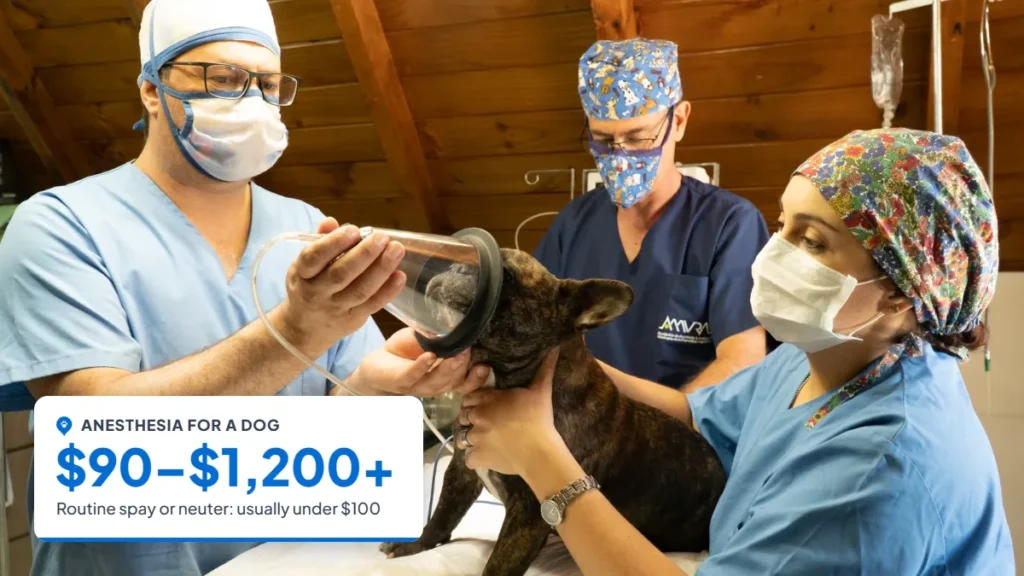
Anesthesia usually adds $90 to $1,200 or more to a dog’s bill, depending on the procedure, the dog’s size and how long it lasts, according to MetLife Pet Insurance. For a routine spay or neuter, the anesthesia itself is likely to cost under $100, while in an emergency it can cost more than $1,000 on top of the surgery, a veterinarian writing for PetMD says. Most clinics don’t list it as a separate price: it comes bundled into the surgery or dental cleaning.
| What you’re paying for | Typical cost | Source |
|---|---|---|
| Anesthesia for a dog, any procedure | $90 to $1,200 or more | MetLife Pet Insurance |
| Anesthesia within a routine spay or neuter | Usually under $100 | PetMD |
| Anesthesia during emergency surgery | Can top $1,000 on its own | PetMD |
| Pre-anesthetic bloodwork at nonprofit clinics | $70 to $160 | York County SPCA, Humane Fort Wayne, ANICIRA |
| Extra fee for short-nosed dog breeds at one clinic | $100 | Idaho Humane Society |
Sources: MetLife Pet Insurance (September 2024); PetMD, written by Rhiannon Koehler, DVM (June 2024); clinic price lists in our table below, read October 31 and November 3, 2026.
If your vet has quoted a surgery, a dental cleaning or a scan under anesthesia, this guide shows what the anesthesia part of the bill pays for, what makes it cost more, how safe it is and how to pay less without cutting the steps that keep your pet safe.
Why anesthesia rarely has a price of its own
Clinics usually fold anesthesia into the price of the procedure, so the useful comparison is what each price includes. A dog neuter costs $150 at one Michigan nonprofit that lists anesthesia as included and $185 to $275 at Idaho Humane Society, while the clinic chain Modern Animal charges $478 to $948 depending on the city and the dog’s weight. Much of the gap comes from what surrounds the anesthetic: tests beforehand, an IV line, how closely someone watches your pet and pain control afterward.
| Clinic | Procedure | Published price | What the price includes | Price list date |
|---|---|---|---|---|
| All About Animals Rescue, Warren, MI | Dog spay or neuter | $150 | Surgery, anesthesia, a pain injection on the day, nail trim | Page updated Jul 2, 2026 |
| Idaho Humane Society, Boise, ID | Dog spay | $215–$375 by weight | Pets 8 and older must also have a pre-surgery exam, bloodwork and an IV catheter; a $100 fee may apply for short-nosed breeds | Not dated |
| Modern Animal, Dallas, TX | Dental cleaning | From $1,050 | General anesthesia, IV catheter and fluids, monitoring, full-mouth X-rays, injectable pain medication; bloodwork extra | Page updated Feb 24, 2026 |
| ANICIRA Veterinary Center, Manassas, VA | Foreign body surgery, dog under 50 lb | $2,379 | Pre-surgery exam, anesthesia with blood pressure, oxygen, temperature and ECG monitoring, warming, pain medication; IV fluids if needed; bloodwork $130–$150 extra | Not dated |
Prices as published on each clinic’s own website: Idaho Humane Society, Modern Animal and ANICIRA read on November 3, 2026, All About Animals Rescue on October 31, 2026. How we collect vet prices explains the method. Modern Animal’s neuter prices come from our guide to neutering a dog.
For a young, healthy pet having a routine surgery, a reputable high-volume clinic is a reasonable choice. The older your pet, or the more health problems it has, the more the extra testing and monitoring are worth. Our guides to spaying a dog and cat spay and neuter costs compare these clinics in detail.
What the anesthesia part of a bill pays for
One line on an estimate covers several steps, and each one adds to the cost.
- An exam and bloodwork beforehand. The 2020 AAHA Anesthesia and Monitoring Guidelines call the pre-anesthetic assessment “critical for patient safety.” At nonprofit clinics, pre-surgery bloodwork costs $70 to $160; see our guide to dog blood work costs.
- An IV catheter and fluids. AAHA says an IV catheter is optimal anesthetic care “in almost all situations.” Some clinics include it; others add it only for older or sick pets.
- The drugs. Usually a sedative and pain medication first, an injectable drug to put your pet under and a gas anesthetic to keep it asleep.
- Monitoring by a dedicated person. AAHA recommends a dedicated anesthetist watching heart rate and rhythm (ECG), blood pressure, oxygen levels, exhaled carbon dioxide and body temperature.
- Recovery. Many anesthetic deaths happen after the procedure, most within the first 3 hours, according to AAHA, so watching your pet as it wakes up is part of the job.
MetLife notes that some vets charge for anesthesia by your pet’s weight and others by the time it takes, so a long procedure on a big dog costs the most.
What makes anesthesia cost more
- Size. A bigger pet needs more drugs and fluids, which is why most clinics price surgery by weight. ANICIRA adds $121 to $220 to its surgery prices for dogs over 50 lb.
- Time. A longer procedure means more anesthetic and more monitoring.
- Age and health. Idaho Humane Society requires a pre-surgery exam, bloodwork and an IV catheter for every pet 8 years and older.
- Short-nosed breeds. Bulldogs, pugs and similar breeds have narrow airways that make anesthesia riskier; Idaho Humane Society may charge $100 more for them.
- Emergencies. PetMD notes that anesthesia for emergency surgery can cost over $1,000 on top of the operation, because a sick pet needs more support and closer monitoring.
How safe is anesthesia for dogs and cats?
Deaths are rare in healthy pets: about 1 in 1,849 healthy dogs and 1 in 895 healthy cats died within 48 hours in the largest study, a UK survey of more than 177,000 anesthetics and sedations. The risk is much higher for pets that are already sick.
| Risk of death within 48 hours | Dogs | Cats |
|---|---|---|
| All patients | 0.17% (1 in 601) | 0.24% (1 in 419) |
| Healthy patients (ASA 1–2) | 0.05% (1 in 1,849) | 0.11% (1 in 895) |
| Sick patients (ASA 3–5) | 1.33% (1 in 75) | 1.40% (1 in 71) |
| Share of deaths that happened after the procedure | 47% | 61% |
Source: Brodbelt and others, Confidential Enquiry into Perioperative Small Animal Fatalities, Veterinary Anaesthesia and Analgesia (2008), covering 98,036 dogs and 79,178 cats.
ASA is a health score from 1 (healthy) to 5 that vets assign before anesthesia. The study comes from UK practices; PetMD cites a 2022 study in which 0.10% of 157,000 dogs died within 48 hours. Because so many deaths happen during recovery, ask how your pet will be watched after the procedure, not just during it.
Sedation or general anesthesia?
Sedation calms a pet for a short, painless procedure and costs less; anything that hurts or needs a pet to stay still for longer needs general anesthesia. X-rays are often taken under sedation; see our guide to dog X-ray costs. A proper dental cleaning, which reaches below the gumline, needs general anesthesia, which is why anesthesia-free cleanings cost less but don’t do the same job. Our guides to dog teeth cleaning and cat dental cleaning explain the difference.
Does pet insurance cover anesthesia?
Yes, when it’s part of a covered treatment: accident-and-illness policies pay toward the anesthesia for a covered surgery or emergency, after your deductible. It isn’t covered for routine procedures such as a spay, a neuter or a cleaning unless you have a wellness add-on. See how pet insurance works, whether pet insurance covers dental work and pet insurance vs. wellness plans.
How to pay less without cutting corners
- Compare what each estimate includes, not just the total: bloodwork, IV catheter and fluids, monitoring and pain medication.
- Combine procedures under one anesthesia, such as a dental cleaning with a lump removal, or a microchip at the spay. Each separate anesthesia repeats the setup costs.
- Use a high-volume or nonprofit clinic for routine surgery in a young, healthy pet. One Michigan nonprofit charges $150 for a dog spay or neuter with anesthesia included.
- Keep the bloodwork for older pets. At $70 to $160 at nonprofit clinics, it costs far less than treating a complication, and some clinics require it from age 8.
- Spread a large bill with a payment plan; compare vet financing options.
The bottom line
Expect anesthesia to account for under $100 of a routine spay or neuter and $90 to $1,200 or more for other procedures, usually bundled into one price. Ask what that price includes, keep the safety steps for older or sick pets and combine procedures when you can. Anesthesia is rarely fatal in healthy pets, and many of the deaths that do happen come after the procedure, so ask how your pet will be monitored while it wakes up. For other common prices, see vet prices in 2026.
Frequently asked questions
How much does anesthesia cost for a dog?
About $90 to $1,200 or more, according to MetLife, depending on the procedure, your dog’s size and how long it takes. For a routine spay or neuter, the anesthesia portion is usually under $100.
How much does anesthesia cost for a cat?
Clinics rarely list it separately for cats either. One Michigan nonprofit charges $50 for a cat spay or neuter with anesthesia included, and full-service hospitals charge more because they add bloodwork, IV fluids and closer monitoring.
Is anesthesia safe for an older dog?
The risk rises with illness: in the largest study, 1.33% of sick dogs died within 48 hours, against 0.05% of healthy ones. That’s why many clinics require a pre-surgery exam, bloodwork and an IV catheter for older pets; Idaho Humane Society requires them from age 8.
Why does my vet want bloodwork before anesthesia?
To check for problems that change how your pet handles anesthesia, such as kidney or liver disease or anemia. AAHA calls the pre-anesthetic assessment critical for patient safety. At nonprofit clinics, bloodwork costs $70 to $160.
Does pet insurance pay for anesthesia?
Yes, as part of a covered accident or illness, after your deductible. Routine procedures such as spays, neuters and cleanings need a wellness add-on.
What’s the difference between sedation and anesthesia?
Sedation calms your pet for a quick, painless procedure such as X-rays, and costs less. General anesthesia puts your pet fully to sleep for surgery or dental work and needs more monitoring.
How we researched pet anesthesia costs
We read the price lists of clinics that say what their surgery and dental prices include, and recorded each price, what it covers and the date on the page: Idaho Humane Society, Modern Animal and ANICIRA on November 3, 2026, and All About Animals Rescue and the pre-surgery bloodwork prices of York County SPCA and Humane Fort Wayne in our October 31, 2026 survey. How we collect vet prices explains the method. Typical ranges come from MetLife Pet Insurance and a veterinarian writing for PetMD. Safety figures come from the largest published study (Brodbelt and others, 2008) and the 2020 AAHA Anesthesia and Monitoring Guidelines. Prices vary by clinic, region and your pet’s health, so your vet’s written estimate is the only exact figure. This article is general information, not veterinary advice.
Sources
- MetLife Pet Insurance: Dog anesthesia
- PetMD: Anesthesia for dogs (Rhiannon Koehler, DVM)
- Brodbelt and others: The risk of death, the Confidential Enquiry into Perioperative Small Animal Fatalities (Veterinary Anaesthesia and Analgesia, 2008)
- AAHA: 2020 Anesthesia and Monitoring Guidelines for Dogs and Cats
- Idaho Humane Society: Hospital price list
- All About Animals Rescue: Pricing
- Modern Animal: Pricing
- ANICIRA Veterinary Center: Affordable pet surgery in Northern Virginia
- York County SPCA: Spay/neuter clinic pricing and Humane Fort Wayne: Spay/neuter